Friday, 19 July 2013

Book Review. Air Disaster Canberra. The Plane Crash that Destroyed a Government by Andrew Tink

The most recent edition of Sabretache. The Journal and Proceedings of the Military Historical Society of Australia has been published (Vol LIV No 2, June 2013). It includes my review of
 
Andrew Tink: Air Disaster Canberra. The Plane Crash that Destroyed a Government (New South, April 2013, x, 309 pp, b&w photos, notes, index, bibliography. ISBN: 9781742233574)
 
I enjoyed the book and think it is an important addition to Australia's military and civil aviation history.

Here's the review...


When I first mentioned Air Disaster Canberra to my military aviation friends there was a ripple of excitement. We had all heard about the crash, we knew some of the aspects of the story from the RAAF perspective, we all had our own theories about Bob Hitchcock’s involvement in the incident, but we had virtually no knowledge of the political consequences. We anticipated a good read and I was not disappointed. Nor, for that matter, was anyone else I know who read this remarkable book. Air Disaster Canberra is divided into three sections: the political rise of the Anzac generation which includes the military backgrounds of key politicians, essential for an understanding of the significance of the loss of their potential contribution to the prosecution of the war; the last flight of Hudson A16-97 on 13 August 1940; and an account of the destabilisation and destruction of the Menzies government which led to John Curtin’s prime ministership in October 1941.


At the heart of Air Disaster Canberra are two arguments. Firstly, that the crash directly led to the change of government the following year and, secondly, that Jim Fairbairn had been at the controls of the Hudson when it crashed. Andrew Tink presents a well constructed case, puts a tragic accident into its proper political perspective, and blends historical background seamlessly into a well written narrative.
 
Andrew Tink occasionally overdoes the block quotes—mainly those relating to the inquiry transcripts—but some are pertinent. For instance, Brudenell White’s words when he accepted his temporary wartime return to duty are poignant in light of what was to come: ‘I do not want to act to the detriment of any permanent staff officer, and as soon as my services are unnecessary I want to return to the farm’. I also found Menzies’ recollection of his reaction to the death of his colleagues moving: ‘Gullett was dead; Street was dead; Fairbairn was dead; the most scholarly and technically talented soldier in Australian history, Sir Brudenell White whom I had recalled from retirement ... was dead.’ Another was Sergeant Jo Gullett’s account of the cold, clinical way in which his senior officer (he was at a British tactical training school at the time) informed him of the death of his father: ‘I have a message from your General Blamey to say that I am to inform you that your father was killed in an air accident yesterday’. He then rattled off the arrangements to return to Australia, concluding with ‘You may overdraw your pay if you wish. I am sorry about this, sergeant. I think that is all.’ These are the exceptions that prove that sometimes block quotes are better than authorial recasting.
 
This is Andrew Tink’s third book; his first two were biography—William Charles Wentworth: Australia’s greatest native son won ‘The Nib’ CAL Waverley Award for Literature—and his biographical skills are again displayed here: he is a particularly talented portrait painter and the reader gains a clear sense of the ten men who died: the politicians, Brigadier Geoffrey Street, Minister for the Army and Repatriation; James Valentine Fairbairn, the Minister for Air and Civil Aviation; Sir Henry Gullett, vice-president of the Executive Council and Minister in charge of Scientific and Industrial Research; General Sir Cyril Brudenell White, who came out of retirement to take up the appointment of Chief of the General Staff; White’s staff officer, Lieutenant Colonel Francis Thornthwaite; Fairbairn’s private secretary, Richard Elford; and the four RAAF crew, the Hudson’s pilot Flight Lieutenant Robert Edward Hitchcock, Pilot Officer Richard Frederick Wiesener, Corporal John Frederick Palmer and Aircraftman Charles Joseph Crosdale.
 
Andrew Tink points out Fairbairn had offered Arthur Fadden, the assistant minister to the treasurer a seat on the Hudson. He later retracted the offer because it had only been made because he understood Dick Elford would be travelling by train. But then Elford decided to stay in Melbourne an extra night to celebrate his wedding anniversary and thus take the seat on the Hudson. Fadden travelled safely by train and went on to become a short term wartime prime minister and long serving post war treasurer. Dick Elford climbed into the Hudson and did not alight at Canberra. It is to Andrew Tink’s credit that he presents this tragic circumstance simply and lightly, with no weighing of a potential greater political good of the surviving politician against the loss of the 30 year old loyal husband and father of twin sons. 
 
For many years, Bob Hitchcock’s flying ability has been called into question, most notably by former RAAF Historian Chris Coulthard-Clark in The Third Brother and Hitchcock’s near contemporaries, Richard Kingsland and Herb Plenty. In arguing that Fairbairn was at the controls, Andrew Tink provides evidence attesting to Hitchcock’s skill with the Hudson and number of incident-free hours flown in this type. I was very pleased to see this reappraisal of Hitchcok’s airmanship, after all many fine pilots took time to develop their skills. Clive Caldwell, for one, admitted that he was not particularly good at flying when he started out, and Pat Hughes, who was a year behind Hitchcock at Point Cook, was ranked 28th in his course and assessed as having no outstanding qualities.
 
Andrew Tink claims that it was perfectly reasonable for Fairbairn to take the risk of landing the Hudson and that Fairbairn deserves his place in history as a respected ‘aviation hero, whose pioneering work, both before and during the war, helped to make flying safer for everyone’. I agree that Fairbairn should be remembered for his good work but I am not comfortable that Andrew Tink failed to acknowledge that if Fairbairn was at the controls, he was responsible for the deaths of nine men as well as his own. That aside, I was fascinated by Andrew Tink’s account of the demise of Hudson A16-97 and all on board. Ultimately, I was swayed by his reasoned speculation about Fairbairn and his careful analysis of the consequences of the loss of three cabinet ministers. I fully agree with his disappointment in the current state of the Canberra memorial to the crash’s victims. But where Canberra fails to honour, Air Disaster Canberra does not. This is a fine tribute to the men who died in the Hudson crash. Highly recommended.  


Tuesday, 16 July 2013

Chalfont St Giles and John Crossman

The Chalfont St Giles parish church dates from the 12th Century. It has fine stained glass windows—mostly Victorian but a few much older—and wall paintings from the 14th–15th centuries. The weather over the last month or so has been warm and wet and the grass in the churchyard had grown considerably and so the parish recently conducted another working bee and the grounds are once again neat and tidy. A big 'down-under' thank you to the diligent parishioners, especially my friend Ian.
 
Recently, one of the Friends of the parish was talking to a visitor who brought two German friends with her. The visitor explained that back in the eighties she had met the fiancée of a pilot buried in the churchyard. It did not take too much detective work to realise that this visitor had met John Crossman’s fiancée, Pat. (The other RAF grave is that of a married airman.)
 
My friend Ian contacted her and she told him that, on 26 August 1988, she had her family had been returning by boat from the Scilly Isles. The weather was poor and combined with rough seas there were a number of queasy people on the upper deck. She found myself seated next Pat. Pat explained that she had gone to Chalfont St Giles a number of times over the years and would be visiting John’s grave again soon. They met briefly when Pat returned to Chalfont St. Giles and had a perfect English tea, in a perfect English garden. It is heart warming to think that this woman has  visited John’s grave in Pat’s stead and shared John’s story with two German friends.


An extract from my Australia’s Few blog http://australiansinthebattleofbritain.blogspot.com.au/ was recently published in the Chalfont St Giles parish magazine.


Wednesday, 10 July 2013

Kristen's Echat With... series. A writer interviewing writers

Have you checked out any of my Echat with... interviews?

The first interview on 1 May was with up and coming ebook and self published author Justin Sheedy http://kristenalexanderauthor.blogspot.com.au/2013/04/kristens-echat-with-justin-sheedy_30.html

The second, on 1 June, was with aviation author Charles Page http://kristenalexanderauthor.blogspot.com.au/2013/05/kristens-echat-with-charles-page.html

The most recent, one 1 July, was with pilot, aviation author and journalist Owen Zupp http://kristenalexanderauthor.blogspot.com.au/2013/06/kristens-echat-with-owen-zupp.html

Forthcoming interviews (which appear at the beginning of each month) are with historian Michael Molkentin, bloggist and book reviewer Andy Wright, Crime and YA author Sulari Gentill and pilot and author Mac Tucker.

Monday, 8 July 2013

Another wonderful review of Australian Eagles!

Author Justin Sheedy has just posted his take on my third book. In the week of the 73rd anniversary of the commencement of the Battle of Britain, it is an apt recognition of my personal tribute to the brave men who fought in Britain's great conflict. Thank you Justin. And thank you for permission to reprint here.

http://crackernight.com/2013/07/08/australian-eagles-australians-in-the-battle-of-britain-by-kristen-alexander-reviewed-by-justin-sheedy/


Australia Eagles by Kristen Alexander
 
Sometimes history doesn’t seem real.  Especially when it seems too dramatic, too tragic, too surreally heroic to be true.  In her latest book, ‘Australian Eagles – Australians in the Battle of Britain’, author Kristen Alexander renders such history quite arrestingly real through her accounts of the part played by young Australians in the making of that history.
 
The Battle of Britain of 1940 remains one of the most famous battles in history, to this day a perfect model of resistance of good against evil and victory against that evil despite staggeringly overwhelming odds.  In that dark year the air force of Nazi Germany, having just rolled up Western Europe, sought to knock out the by comparison tiny British Royal Air Force as a prelude to Nazi invasion of Britain.  The Germans thought they had won before they started.  The iconic battle that ensued proved them wrong.  Of the victorious defenders, Winston Churchill coined one of the most famous lines in the English language: “Never in the field of human conflict was so much owed by so many to so few.”  ‘Australian Eagles’ is a portrait of six of the Australians within that now immortal “Few”.
 
Kristen signing at recent book launch
 
Kristen Alexander portrays six shining young men.  Four of whom lost their young lives in the battle, a fifth losing a leg though continuing to fly until 90-something, the sixth remaining unscathed despite bailing out of his Spitfire in hot air combat no less than three times.  Shining young men?  It’s no exaggeration:  Alexander’s beautifully-researched account of each of them reveals the kind of exceptional personalities they were, often top-notch sportsmen as well, and all so very, very young:  Their photographs within the pages of ‘Australian Eagles’ attest to this and reveal fairly each of them as arrestingly handsome, usually with a brave new moustache – as if to mask the fact that they were just boys.  By portraying them as such and quite simply as they were, Kristen Alexander encourages us to feel their loss just as profoundly as it deserves to be.  To marvel at their selflessness, their courage, their dog-fighting brilliance and their contribution towards victory against one of the worst evils the world has ever known.  To remember them.
 
‘Australian Eagles’ in indeed a fitting testament to the young Australians who fought to win the Battle of Britain but most poignantly as they did it a whole world away from home. 
 
‘Australian Eagles – Australians in the Battle of Britain’ by Kristen Alexander. Order now at http://www.alexanderfaxbooks.com.au/available-now-australian-eagles-australians-battle-britain 
 
 
Author Justin Sheedy
 
Reviewer Justin Sheedy is the author of ‘Goodbye Crackernight’ and ‘Nor the Years Condemn’.  See Justin’s Blog http://crackernight.com/

Sunday, 7 July 2013

Searching for Jacqueline Bush, born October 1922, formerly of 23 Beaumont Close, Gidea Park, Romford

Can anyone help? I am trying to find out about Jacqueline Bush, who was friends with John Crossman and Billy Pattullo of 46 Squadron in the last weeks of their lives in 1940.
 
18-year-old Jacqueline Bush of 23 Beaumont Close, Gidea Park, Romford, was a happy, carefree young woman with a great sense of fun. In September 1940 she met Australian John Crossman and Chilean-born Billy Pattullo, known to Jacqueline and his squadron friends as Pat. Both had recently been posted to 46 Squadron at Stapleford Tawney.

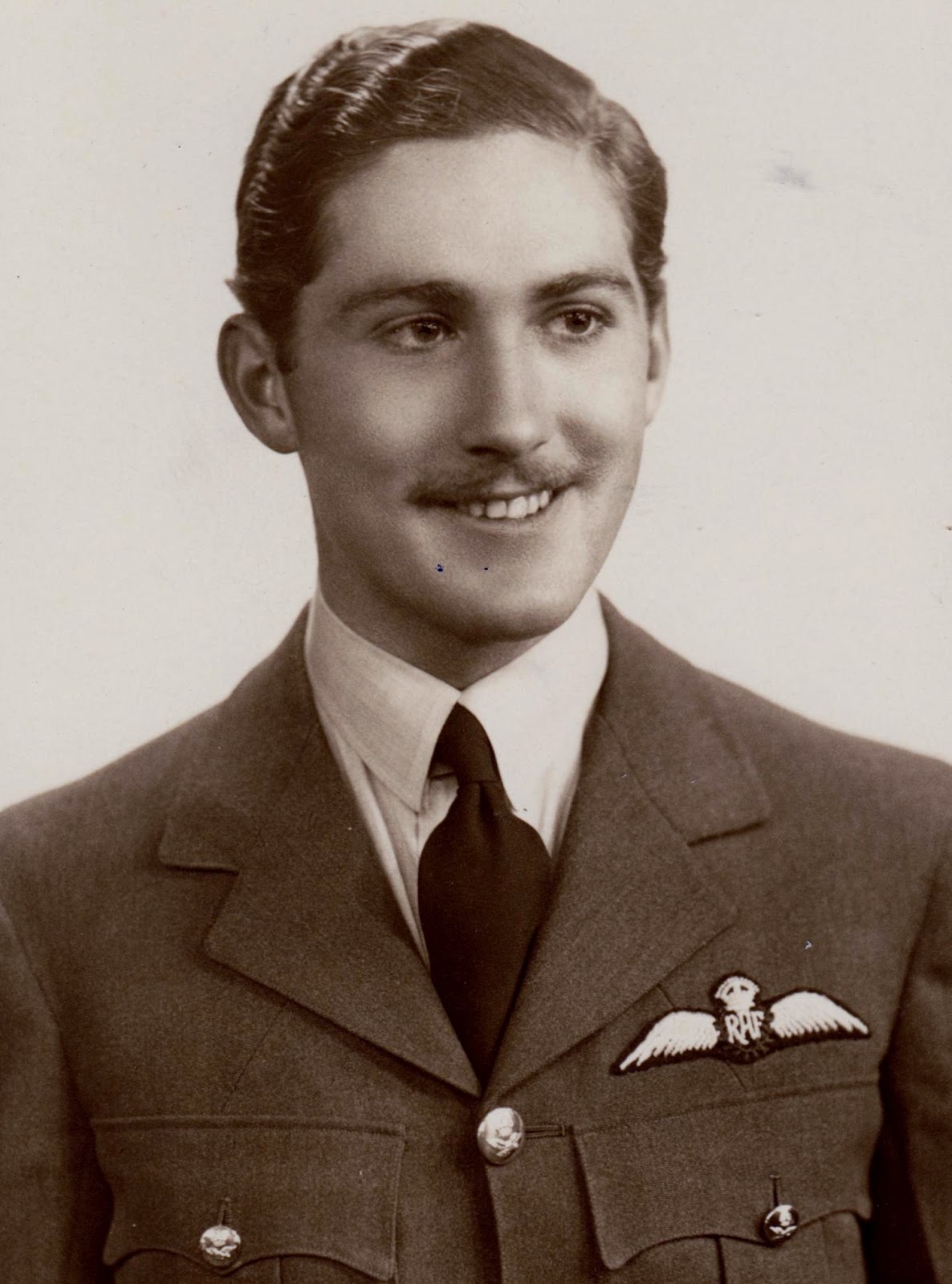
John Crossman

 
Billy Pattullo 
John and Billy were very busy in the last weeks of September. Jacqueline’s heart ached for them. ‘They used to be flying at dawn...and they often weren’t off duty until 10.00 p.m.’ When the young pilot-officers could grasp a few hours relief they met up with their new friend. They sped about in John’s car, the three of them squashed in the front seat, Jacqueline feeling ‘proud as a peacock’ sitting between her handsome escorts. They cracked jokes and told stories, laughing madly in an effort to forget the serious business of fighting. ‘What fun we had’, Jacqueline recalled. ‘We used to tear around and just shriek at the most idiotic things—just like three kids.’
 
On 30 September John was killed in battle. His Hurricane crashed in flames at Tablehurst Farm, Forest Row. Jacqueline was still grieving for her friend when Billy’s Hurricane was badly damaged in battle on 25 October and, while attempting to land, he struck a house in Harold Park. He died from injuries the next day.
 
Jacqueline had known John and Billy for such a short time but greatly missed her ‘charming, attractive and gallant’ friends. She recalled that ‘we didn’t have much time together but what we did have was glorious.’
 
On the first anniversary of John’s death Jacqueline wrote to his family and told them about the great friendship he, Billy and she had shared and the happiness of John’s last days. She kept in touch and years later told the Crossmans that she could ‘still see him standing there in the moonlight’ on that last night. ‘Smiling and looking really happy. I always want to remember him just like that.’ Thanks to Jacqueline, that is how John’s family was able to remember him.
 
I would like to know about Jacqueline Bush’s background, her brief but glorious friendship with two young pilots who died in the Battle of Britain, and the ‘what happened next’ in her life. So far I have discovered that Jacqueline M and her twin sister Jeanne B Bush of Romford born in October 1922. Their mother’s maiden name was Lane. Their father was in the army and, in March 1943, was stationed in San Francisco, in charge of troop movements. There were only four in the family. Mrs Bush was very ill in the latter part of 1942 and Jacquie moved back home to Beaumont Close. Jacquie had a serious accident when she was knocked down by a lorry in early 1943. She had a badly lacerated scalp and would be subject to bad headaches probably all her life. She had trained in aircraft inspection but after the accident could not stand the noise so would have to look to some other war work. She had not come up with anything by March 1943. She was very anti-rushed marriage in wartime. (It was one of her little hobby horses.) She believed that many of the girls who married in haste in wartime would have a shock when their husbands came home. She said that she would never marry while the war is on. Attitudes change over time but she was not married in March 1943 and it seemed a strongly held stance so I would not expect to see a marriage for her before the war was over!
 
Ancestry.com indicates that a Jacqueline Bush married someone called Field or Ehrenfeld in Chelsea London in March 1950 a Jacqueline Bush married an Elliott in Bromley Kent in March 1957. Ancestry also indicates a marriage of Jeanne B Bush to a Kennedy in September 1944 in Romford and also another in 1955 to a Courtney in Romford. But I don’t know if these marriages relate to John’s and Pat’s young friend and or her sister.
 
If anyone knows what happened to Jacqueline or knows someone from her family, please get in touch with me at alexfax@alexanderfaxbooks.com.au

Friday, 5 July 2013

Kristen Alexander's online interview with Justin Sheedy

I recently had the pleasure of being interviewed by author Justin Sheedy. This appeared on his Goodbye, Crackernight blog at http://crackernight.com/2013/07/01/kristen-alexander-author-of-australian-eagles-australians-in-the-battle-of-britain-interviewed-by-fellow-author-justin-sheedy/
 
Justin very kindly allowed me to republish the interview here. The formatting is not quite the same but the substance is!
 
Kristen Alexander is the author of Clive Caldwell Air Ace (Allen & Unwin 2006) and Jack Davenport Beaufighter Leader (Allen & Unwin 2009), two definitive biographies of Australians at war which have been received just as warmly by the general reading public as by military history experts. 
Australia Eagles by Kristen Alexander
 
Demonstrating her flair for rich historical detail at the same time as being accessible and easy to read, Kristen’s latest offering, Australian Eagles, Australians in the Battle of Britain has this week been published by Barrallier Books.  I was lucky enough to interview Kristen in the lead-up to this highly-anticipated release…
 
Your literary portraits of Australian air-combat heroes from World War II have been thoroughly enjoyed and widely acclaimed by both Australian and International readers.  What are your key inspirations to write about these amazing young men?
 
I came to Clive Caldwell’s story almost by accident. My husband and I own a second hand book business, specialising in military history. We purchased some letters written by Caldwell during his time in the Western Desert, shortly after his first victories. I read the letters and was fascinated. I wanted to learn something about the man who wrote so freshly, vibrantly and candidly—the letters were to a male friend—about his experiences. I started researching him and decided to do a talk for my military history group. One of my friends said ‘there’s a book there’ and so I continued researching!


Jack Davenport also came about by accident. While writing Clive Caldwell Air Ace I spoke to Peter Ilbery, who had done a lot of research on the Empire Air Training Scheme, as I wanted to clarify some aspects of the scheme. We also talked about Caldwell as a leader and the nature of leadership and Peter, who had served with 455 Squadron during the war, compared Caldwell’s leadership practice with that of 455’s one-time CO Jack Davenport. Sometime after finishing CCAA, aviation author Lex McAulay, who assumed I would continue to research Australian pilots, emailed me a list of possible ‘candidates’. Jack Davenport was on the list. Next thing I knew, Peter was on the phone saying he had heard I was going to write about Jack Davenport. And it seemed I was!


From the start, my Battle of Britain research was something I was consciously drawn to. I had finished Jack Davenport Beaufighter Leader and was reading H.E. Bates’ A Moment in Time, which is set during the Battle of Britain. An Australian was mentioned and I wondered if Australians had really fought in the Battle or if Bates had been exercising some creative licence. It only took a little reading to discover Australians had fought and by that stage I wanted to know more, and from there I set forth on a new research path.
 
Whatever the original spark, I have concentrated more on writing about the person behind the pilot than the battles in which they fought. I wanted to try and understand what motivated them, what made them a good pilot, and the importance of their relationships with other people. For me, biography is my writing inspiration; the people who make up history. But I still want to get the history right, and so I read a lot about the ‘life and times’ of my subjects so I can set them and their experiences in the historical context. 
 
What qualities from the Australian ‘national character’ would you say made these young Australians stand out on the ‘world stage’ on which they fought?
 
We are a laid back country but when something gets under our skin passion and commitment flare up. We are willing to fight for a cause and in the Second World War that cause was freedom from tyranny. All my pilots share a love of their country, whether the one in which they were born, or an adopted homeland; a commitment to duty; and a flash of larrikinism or the tendency to go beyond the rules when necessary. They were also loyal to their comrades: mateship, of course, is another very Australian trait.


Just one highly-praised aspect of your works is how you so richly capture the ‘atmosphere of the times’ in which these shining young Australians put their lives on the line to defend Australia and the Free World, often crossing the world to do so.  Do you think, given similar circumstances today, that young Australians would do the same en masse as they did in World War II?   
 
 
I think we would. And plenty already do. Our brave servicemen and women have been fighting in Afghanistan for many years; our peacekeepers continue to make the world a better place; our emergency personnel drop everything to offer their expertise during disasters here and in other countries. We are a nation of volunteers and donators to great causes and we value democracy and a safe world. This commitment to others is a part of the Australian psyche. If our homeland were threatened, we would rise to the challenge just like the young men and women who served in so many capacities during our world wars.
 
 
The Author at Home
The Author at Home
 
Fighter pilots from World War II even in their own lifetimes achieved a legendary ‘mystique’ with the wider public, an almost ‘super-human’ aura about them by contrast to ‘mere mortals’ like us. And yet these young fighter pilots were human beings just like us.  What human qualities do you think characterised these young men given the amazing feats they performed?
 
They were dedicated to flying. More than that, they were passionate about flying. Clive Caldwell lied about his age and, when he discovered all on his training course would end up as instructors, he finagled his way out of it and into fighter training. Dick Glyde overcame a slight curvature of spine when he was turfed out of the RAAF for medical reasons and applied for the RAF. And when they became pilots, they did all they could to ensure they were the best. Clive Caldwell practised shooting and devised his own technique to perfect his art. John Crossman diligently supervised the maintenance of his Hurricane to ensure it was in tip top condition. And when they were fighting, they let nothing distract them from their duty.
 
That commitment to duty was the trait that impressed me the most, especially in relation to the Battle of Britain pilots. All of my subjects displayed a commitment to duty but there was a difference. Clive Caldwell and Jack Davenport enlisted knowing they would have to fight but the Battle of Britain pilots did not set out to fight a war. They joined the air force so they could fly. But when war came, they accepted that they would have to fight; it was their duty. John Crossman said it all: ‘Should this last any time it seems unlikely that I’ll ever see home again. Still I expect it can’t be helped. A fellow has to realise that.’ And then he decided to apply for fighter training instead of bomber training, as he had originally planned, so he could take the fight to the Germans.  
 
Your first book, Clive Caldwell Air Ace, was a portrait of Australia’s top-scoring fighter pilot from World War II, your next the warmly received Jack Davenport Beaufighter Leader, portrait of this so very impressive Australian bomber pilot.  What would you say are the key personality differences between these two different breeds, fighter pilot / bomber pilot?
 
Hard work paid off!
Hard work paid off!
 
Clive Caldwell and Jack Davenport were remarkable men who achieved great things in war and peace. I think the key difference between them as fighter pilot and bomber pilot was that Clive Caldwell was an individualist—he was accused of being a lone wolf by his squadron—which made him a good combat pilot. He could accept risks to his own safety; he wasn’t responsible for any other man. Jack Davenport wanted to be a bomber pilot from the beginning because he felt a responsibility to others, and he was willing to accept that. He was what we would now call a team player; operations aside, his crew would always come first. And that’s what made him a good bomber pilot and crew leader.
 
Both were touched by war but those experiences left very different legacies. I think the main reason for such different reactions to the war can be seen in the nature of their service. As a fighter pilot, Caldwell was solely responsible for himself and his actions. In aerial combat, he looked into the whites of his enemies’ eyes, so to speak, and he saw his comrades fall in battle, sometimes in flames, or shot down as they parachuted from their aircraft. He saw upturned faces of the perhaps still living Japanese aircrew. He was wounded in battle at least once. Death for him was an almost intimate experience. As a bomber and anti-shipping pilot, Jack Davenport, like Caldwell, encountered danger on each sortie but he was more removed from the enemy. He dropped his bombs in darkness on cities often obscured by smog haze. He fired torpedoes, cannons and rockets at huge merchant ships whose anti-aircraft defences were firing directly at him. He may have seen their bodies blown off the vessels, but he did not see faces of the flak operators or enemy sailors. They did not return to haunt him. And rather than dwell on the long ago encounters, he eschewed inward contemplation of his role in warfare. He turned his attention outwards, towards others.
 
Your next release is Australian Eagles, Australians in the Battle of Britain.  What can readers expect from this, your latest offering?
 
Australian Eagles by Kristen Alexander
 
More biography! Though this time I look at the lives and flying careers of six airmen. Australian Eagles is a collection of six biographical essays. It has been solidly researched but it is perhaps more accessible to a broader readership than my first two books in that I don’t interrupt the flow of the story with references. Other than some brief introductory material, I don’t retell the story of the Battle of Britain. I just focus on the place ‘my’ boys had in the Battle. Because the majority of the essays were originally published in Wings, the RAAF Association’s magazine, they are short biographies that can be read in one sitting. The simpler storytelling is a different approach for me and the essay form meant I had to focus on key aspects of ‘my’ pilots’ lives. In addition to Jack Kennedy’s, Dick Glyde’s, John Crossman’s and Des Sheen’s stories which were originally published in Wings, Australian Eagles includes Stuart Walch’s and James Coward’s stories, which I have not published before. And because I could not help myself, I have added new information to all the Wings stories.
 
The book is beautifully produced on quality paper with lots of photos. I have signed and numbered each one of the collectors’ edition of 500 copies. I am very proud of Australian Eagles.
 
Ever since Winston Churchill coined his legendary rhetoric, the Battle of Britain has been mythologised as Britain and the Commonwealth’s ‘finest hour’.  Given your intense labour of research in writing Australian Eagles, what would you say might have been the Battle’s ‘finest hour’?
 
I think the Battle of Britain produced many fine hours: The moment when the pilots committed to a possible death in battle when all they had wanted to do in the first place was fly. The moment when a fighter pilot became embroiled in deadly a dogfight and twisted and turned until he could line up in his sights another aircraft, flown by a man perhaps as young as he. And then fire. The moment when the British people decided to thumb their noses at Hitler and not succumb to the threat of a possible invasion or to give up under bombardment. Britain can take it. She certainly could. There are too many fine hours to pinpoint just one.
 
The iconic Spitfire
The iconic Spitfire
 
If the young Allied pilots were the heroes of the Battle of Britain, it might be said that the ‘heroines’ were the fighter aircraft they flew: The legendary Spitfire and Hurricane.  In the ensuing 73 years since the Battle was won, much has been written about these two aircraft, and to this day there exists divided preference as to which was the greater in terms of their contribution towards ultimate victory in the Battle.  Which would you nominate as the greater and why?
 
I’m not falling into that trap! Both aircraft had their vices and virtues. Flown with skill and daring, they were both lethal weapons. The Spitfire and Hurricane were not the only heroines of wartime. We mustn’t forget the women who waited for their men to come back: the Jean Caldwells in Australia who feared the arrival of a telegram and the Sheila Davenports in the United Kingdom who dreaded a call from the Station Commander after an op, but who ultimately welcomed their husbands home, and the Pat Foleys who had no idea when their fiancés would return and then received the cruel telegram advising a tragic death. They were true heroines.
 
As a result of the limited gender perceptions that prevailed in the World War II era, only young men were ever considered as capable of becoming fighter pilots.  As a female author with more passion for and detailed knowledge of the era than most men, have you ever dreamed of being a Spitfire pilot?
 
Oh no. My passions lie elsewhere. I leave it to ‘my’ boys to experience the joy of flight in Spitfire, Hurricane, Kitty Hawk or Beaufighter. I don’t feel that I am at a disadvantage as an author of aviation biography in not being a pilot. From the beginning, I have wanted ‘my’ boys to tell their stories in their own words. I am just the conduit for them to have their say. Where possible, I draw on their own flying experiences through letters, diaries and other written works, combat report and interviews. After all, any experience I have would be very different from theirs! 
 
What are the most important messages that you would hope readers take away from reading Australian Eagles, Australians in the Battle of Britain? What is THE most important?
 
That Australians did indeed participate in the Battle of Britain, that they fought well, and bravely. That some gave their lives to protect the freedom of others and that their sacrifice is remembered. Perhaps the most important message is that they ARE remembered.  
 

Australian Eagles, Australians in the Battle of Britain by Kristen Alexander is now available.  You can purchase Australian Eagles (ISBN 9780987414229) as well as Clive Caldwell Air Ace and Jack Davenport Beaufighter from www.alexanderfaxbooks.com.au (which is owned by Kristen and her husband David).  All copies will be signed. 
 
When ordering, please let Kristen know if you would like a personal message.
 
 
Connect with Kristen at:

 
Author Justin Sheedy
 
Interviewer, Justin Sheedy, is the author of Goodbye Crackernight, a comic memoir of growing up in 1970s Australia, and of Nor the Years Condemn, an historical fiction based on the stunning (and untold) true story of the young Australians who flew Spitfires in World War II.  See Sheedy’s interview with Kristen at http://crackernight.com/2013/07/01/kristen-alexander-author-of-australian-eagles-australians-in-the-battle-of-britain-interviewed-by-fellow-author-justin-sheedy/
"Goodbye Crackernight" by Justin Sheedy
“Goodbye Crackernight” by Justin Sheedy

 
“Goodbye Crackernight” is available at Dymocks, also as an Ebook and in paperback at Amazon.  “Nor the Years Condemn” is available at Dymocks, in paperback at Amazon and as an Ebook at Smashwords.
 
And now at Gleebooks, Berkelouw Books Paddington and The Australian War Memorial. Sheedy’s latest book, Ghosts of the Empire (much-anticipated Sequel to “Nor the Years Condemn”) will be released at the end of July 2013. 

Nor the Years Condemn by Justin Sheedy
“Nor the Years Condemn” by Justin

Sunday, 30 June 2013

Book Review: Australian Eagles. Australians in the Battle of Britain

It is always nerve wracking waiting for publication date and the first reviews.
 
What will people think of your latest 'literary baby'.
 
Will they read it carefully before making an assessment?
 
Will they send it to the second hand bookshop without even looking at it (that has happened!)
 
And so, I have been having stress attacks for the last couple of weeks worrying about the overall reception even though Australian Eagles has already garnered a few good early bird reviews.
 
Today, 1 July, is the Official Release Date and my heart is still pattering but for a good reason. I am overwhelmed about Aircrew Book Review's wonderful review. I need a another cup of tea to calm me down.
 
Read this extract for an idea of just how perceptive this review is:
 
Previous works by the author have revealed a particularly detailed eye for the personal and this is very much evident in AE, especially so for those featured who did not survive the Battle. Letters and, in some cases, diaries have been pored over and it is clear from each of the ‘biographies’ that there has been much reading between the lines. The standard format of childhood, education, employment, learning to fly etc is, understandably, followed but as much attention is paid to the pre-service life of each man as it is to the ‘exciting’ stuff – their time as pilots. This balance is of course not seen with Sheen or Coward as both survived the Battle (and the war). Reflecting on their survival, the attention paid to the pre-war lives of the men who weren’t so lucky becomes all the more important. Other than their families, where they are still mourned, who else will know why John Kennedy rarely smiled in photographs or that John Crossman’s first flight in his life was with Charles Kingsford Smith? The result of such in-depth research and analysis, lovingly so in some respects, is an understanding beyond anything official records (and most books) will ever provide. The reader is introduced to each of the men and develops an affinity with them – so much so that one can suddenly see behind the cocky grin and rakishly angled service cap. The grey tones of the photographs are noticed less and less as you see the colour of their lives.

Read the whole review at http://aircrewbookreview.blogspot.com.au/2013/06/australian-eagles-kristen-alexander.html

Order your copy now at http://www.alexanderfaxbooks.com.au/available-now-australian-eagles-australians-battle-britain