Conflict and Society Webinar: 28 September 2021
School of Humanities & Social Sciences
UNSW Canberra
‘He “assaulted me at the matrimonial home”: captivity trauma and domestic abuse.’
Introduction: captivity trauma and domestic abuse

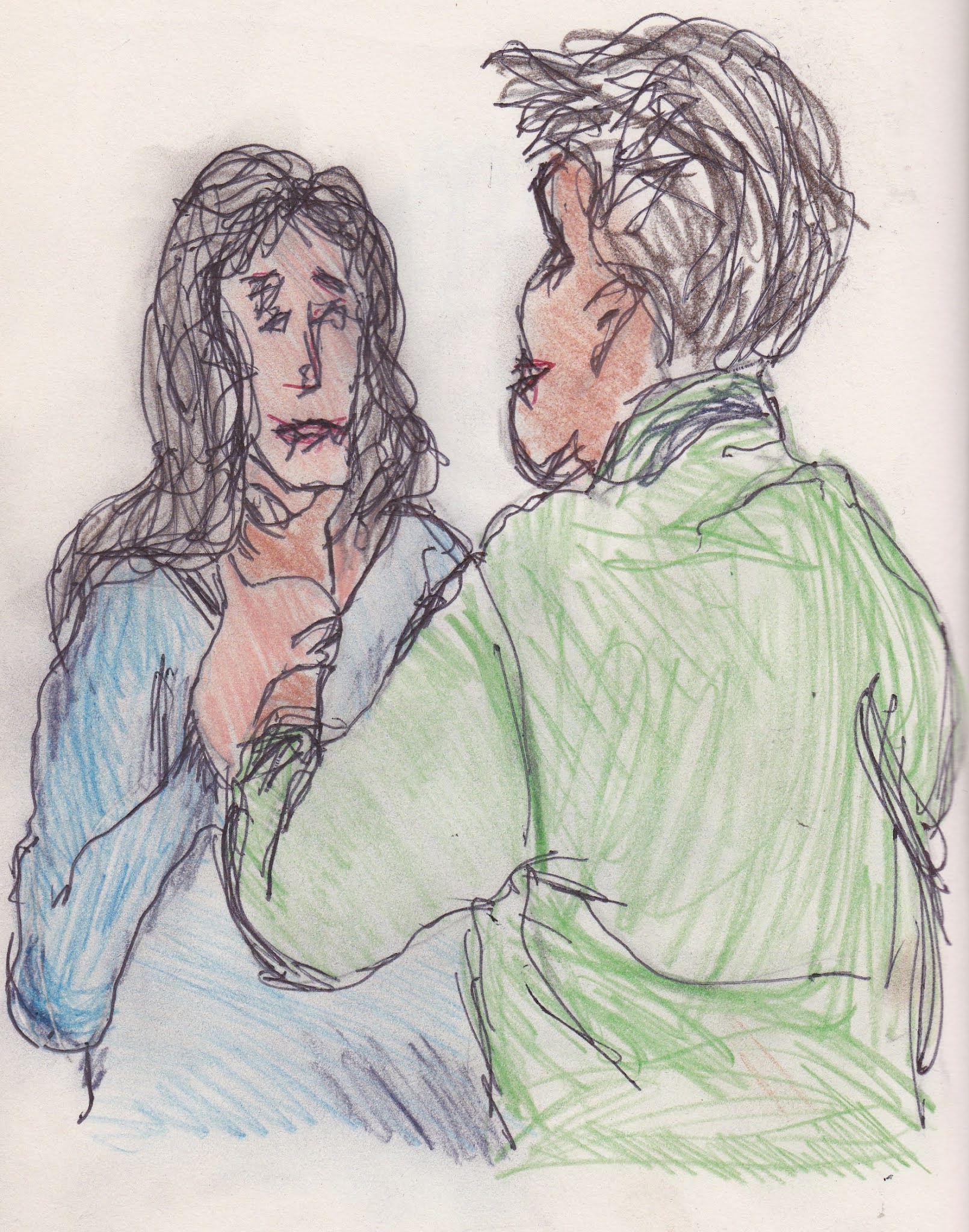
‘Twice my husband attempted to kill me’, Madeline Reed stated. ‘The first time he held a carving knife against my throat and was stopped from going any further by our son [Peter] … coming into the room. The second time, without any argument or quarrel, he knocked me over and kicked me about the face and head.’ He ‘assaulted me at the matrimonial home’, Hayley Myatt attested about her husband, ‘grabbing me by the hair, shaking me and banging my head against the wall’.
Blake Reed and Marcus Myatt were former airmen prisoners of Stalag Luft III, a Second World War German prisoner of war camp. Both experienced captivity trauma. Both perpetrated domestic abuse against their wives, in front of their children.
In the years following the Second World War, violence in the home was often ‘subsumed and silenced by the broader question of domestic readjustment’ after homecoming. It was viewed as just one of a number of social ills arising from resettlement. With little concrete evidence collated in the immediate post-Second World War decades about violence arising from war service generally, it probably isn’t even possible, as Christina Twomey has noted, to determine the extent to which captivity contributed to family unrest. But it is perhaps easier to highlight historical domestic abuse by examining a small cohort.
*****
This webinar draws on my PhD thesis ‘Emotions of Captivity: Australian Airmen Prisoners of Stalag Luft III and their Families’ in which I studied the captivity experience of 351 Australian airmen and their loved ones – from capture until death. A condition of use of some records is anonymity. As such, I have used pseudonyms, and these are written in italics. And a content warning: I will be quoting graphic testimony of domestic abuse which some may find distressing, or potentially triggering.
For my thesis, I compiled a medical sample of 128 of Stalag Luft III’s former Australian POWs. This is based on evidence from Prisoner of War Trust Fund records, divorce cases, coroners’ reports, family members, and other sources. The majority came from repatriation files held by the Department of Veterans’ Affairs, most of which had been created by the former Repatriation Department. I found that eighty-five former POWs had experienced some degree of psychological damage during confinement, after liberation and homecoming, in the immediate post-war years, and in later life. Domestic abuse figured in the lives of at least 10 per cent of that psychological sample. All had been experiencing mental disturbance when perpetrating abuse. I found that, while some domestic abuse arose from a ‘crisis of masculinity’, it was also an expression of captivity trauma. As such, I positioned abuse as a psychological issue. But domestic abuse is also a gender issue. It is an emotional and sensory experience. It has a moral dimension. It also ‘lingers on in … memories’; it has an intergenerational legacy. These broader contexts are what I will highlight this evening.
Evidentiary challenges: subsumed and normalised
In the immediate post-Second World War decades violence in the home was still portrayed as ‘wife-beating’ or ‘wife bashing’ and women were considered to be ‘battered wives’. There was nothing as wide-ranging as current definitions of abuse which include physical, sexual, emotional, economic, and verbal abuse. Not all of these behaviours involve violence. As such, I favour the broader term of ‘domestic abuse’ with the understanding that it encompasses acts against intimate partners and other family members.
I found evidence of abuse enacted by Stalag Luft III’s former POWs against their parents, spouses, siblings, and children. Unfortunately, time does not allow me to go into all of them here, so I will focus on the former POWs, their wives, and their children.
My main source of domestic abuse in Stalag Luft III’s distributed archive comes from women’s testimony created in the immediate post-war decades, before the advent of second-wave feminism, and before the term ‘domestic violence’ was coined in the late 1970s. Children’s testimony was uttered more recently. Evidence of domestic abuse falls into two categories: empathetic veteran-centric narratives from the medical archive and lived experience, and combative statements from divorce records. I refer to those who responded compassionately to domestic abuse as ‘helpmeets’. Those who assertively decided to take no more I dub ‘combatants’.
Some accounts must be treated with care. Coded language appears in more recent narratives to either protect the suffering veteran or to create a barrier against the memory of abuse. Anything created for financial or personal benefit, such as to support pension claims and medical expenses, or, in the case of divorce proceedings, to elicit maintenance settlements or favourable custody decisions, could have been heightened to facilitate the best outcome. Some evidence has been recast by legal or medical practitioners to emphasise facts; they have been rendered devoid of emotion.
I encountered other evidentiary challenges. In describing their captivity trauma as part of the repatriation process, former POWs rarely articulated narratives of perpetration. Where domestic abuse was admitted, the causes were seldom explored: medicos and repatriation bureaucrats considered abuse as symptomatic of a psychological condition. Men were not treated as perpetrators of abuse. They were ill. Family members, particularly wives, were not viewed as victims of abusive behaviour. They were valued witnesses to traumatic responses. They were carers of the psychologically damaged and had a significant place in the repatriation system.
There is much silence in the distributed archive. In a post-war society where domestic abuse was subsumed and normalised, abuse was usually kept within the home. The law did not acknowledge some behaviours: rape within marriage was not illegal. Women did not perceive some acts as abusive because they had yet to be defined. Keeping a wife on a tight budget – limiting her financial independence – would have been usual in many households dominated by a male breadwinner. Also unrecognised at the time was what we now know as coercive control where an abuser deliberately and systematically tries to restrictively manage all aspects of a person’s life; and gas-lighting, where the victim is forced to doubt her memory or perception of events.
Despite the evidentiary challenges and silences, testimony from the medical and divorce archives – and lived experience – is important. When examining narratives of abuse, therefore, we need to deploy two lenses. A contemporary one which allows us to see how women and men viewed themselves and behaviours within their specific culture and time, and a modern one so we can look beyond what men and women said or wrote (or didn’t say or write) to what we can infer – or label – in light of more modern definitions and understandings.
Edric Parr’s actions, for example, appear coercive. He ‘became very controlling … the insecurities behind those behaviours’, his daughter Angela told me, ‘in their own way[,] held my mother “captive” to the emotional bind’. But Edric ‘was not physically abusive’. As such, his family did not see his controlling behaviour as a form of abuse. His obsessive compulsive disorder was a diagnosed psychological condition, arising from the ‘trauma and emotional damage [resulting from] his POW experiences’.
When I asked Bethany Lane if she had witnessed or experienced domestic abuse, she told me that her father’s moods were erratic and he could turn suddenly. Bethany was only three when her mother was hospitalised after a ‘scene’ during which Gerard ‘was furious’. She was ‘often terrified but didn’t know why’. The young girl also ‘endured a lot of verbal abuse’. ‘Loud shouting that made me very fearful’. Bethany also confirmed that she had lived with coercive behaviour. ‘Dad’ was ‘very controlling [in] what we did or said’. ‘If visitors came we were to be seen and not heard except if we recited something.’ He had high expectations and ‘the pressure from him stifled me’.
Petronella Barrie also suffered emotional abuse and coercive control. Her husband Hugo restricted her social life, forbidding her to accompany him when they were both invited out because he was ‘ashamed of her’. He undermined her self-esteem, Petronella attested, and ‘incessantly criticised’ her – using ‘expressions of the most offensive and insulting nature’. He stressed that he considered her to be ‘quite worthless’.
Hayley Myatt described an occasion where her husband gas-lighted her. Marcus viciously twisted her nose, still painful and healing after surgery. ‘[A]s he was doing it’, she claimed, ‘he said “you are just imagining it, I am not touching your nose or hurting you at all”’. Given much of her abuse took place at night in their bedroom, Hayley may also have been sexually assaulted. ‘[W]hile in bed’, she stated in her divorce testimony, Marcus [‘struck] me on a number of occasions … forcing my arms into a position which caused me great pain’.
Helpmeets and Combatants: collateral damage
Woman today are recognised as victims of abuse, but with urgent calls to replace ‘victim’ with the more affirming ‘survivor’. Men are uncompromisingly categorised as perpetrators. Helpmeets, however, did not see their husbands as perpetrators. Their presentation of evidence to the repatriation bureaucracy was entirely veteran-centric: it emphasised male victimhood not their own. They were witnesses to masculine fragility.Some helpmeets unconditionally loved their husbands. Cassie and Edric Parr were a ‘devoted couple’ for sixty-nine years, with ‘an adoring love and affection for each other that was a soul journey of its own’, their daughter Angela recounted. Others may have felt obliged to remain within difficult marriages because of children, religion, economic dependence, or because a society which condoned domestic abuse did not provide a place for those who wished to escape it. There was also a societal imperative to stay and support. As so many of their grandmothers and mothers had done in the wake of the Great War, these women accepted society’s and the repatriation department’s expectation to care for a new generation of ‘shattered Anzacs’ or, in this context, ‘fragile flyers’.
Even in the most challenging relationships, helpmeets recognised the pain of captivity trauma. Accordingly, they chose to stay, to make a home, to support their husbands, and to protect their children. They found ways to accommodate the fragile flyers’ behaviour. But their compassion exposed them to abuse.
Madeleine Reed, who felt cold steel against her throat, separated from Blake shortly after the knife attack. Six years later, she was close to destitution so allowed him to come back. It was a financial necessity but empathy intermingled with pragmatism. She knew how much Blake loved their son; saw what a good relationship they had. She also pitied her husband who ‘had deteriorated greatly. … he drank more than ever and would sit … staring into space. … Sometimes for hours he would talk in a low voice about [the] POW camp. I was frightened, but did not like to leave him when he was so troubled’.
Cynthia Lane inured herself to abuse. She ‘was used to dealing with trauma’ inside her marriage and often told her daughter, Bethany, ‘just allow the pain to wash over you like water off a duck’s back’. As a consequence of her husband’s treatment, Cynthia ‘suffered incredibly emotionally’. She had no other family to turn to and ‘in those days you never divorced’. Cynthia put her children first, protecting them from Gerard’s behaviour by trying to create a ‘safe place’. ‘In her quiet way’, Bethany recalled, ‘Mum built … a small spark of hope in us by reading the Bible’.
Bethany is also a helpmeet. Despite a difficult childhood and a period of estrangement in her early twenties, she never stopped loving and supporting her father. She has spent much of her adult life actively trying to fathom Gerard’s trauma and, before his death, reconciling with him. By trying to accommodate her father’s behaviour and to forgive him, she has composed a narrative of acceptance which attributes domestic abuse mainly to ‘the war’, but to other life experiences as well. She knew he was ‘so damaged’ and in pain but ‘without … understanding what it was all about’. She later considered that ‘what Dad had been through’ during the Depression, war, and captivity, stimulated him to ‘make us ready for anything we might meet up with in life’. She also realised that ‘Dad usually eventually came through with compassion [to] those he inflicted with emotional pain’.
In her attempts to comprehend Gerard’s experiences and the root cause of his trauma, Bethany has exerted loving, empathetic agency. So, too, did her mother and other women who embraced a helpmeet role to fragile flyers shattered by captivity trauma. Some recognised the blessings despite unrelenting mental pain. Cassie and Edric Parr derived ‘genuine appreciation and benefit’ from their long, happy marriage.
*****
The divorce archive reveals no helpmeets. Plaintiffs did not present their husbands as fragile flyers. Hayley Myatt sued for divorce on the grounds of repeated assaults and cruel beatings. Petronella Barrie cited cruelty and desertion. They described their husbands as malicious wife-beaters. They provided no mitigating statements relating to psychological state.
Hayley and Petronella were combatants. Their weapons were searing accounts of physical and emotional brutality in matrimonial homes that had become war zones. Fronting the divorce court in an era before no-fault divorce took courage. Intimate and prurient details were often aired in the press. They had children to raise, with no income other than their husband’s and no home to go to unless, like Hayley, they could move in with parents, or like Petronella, had husbands rich enough to maintain two households. There would have been an element of shame in publicly projecting an image of helpless, battered wife, but it was necessary. In making the decision to leave for the sake of self and children, risking social stigma to argue cruelty, and positioning themselves as victims, combatants exerted pragmatic, protective, and survivalist agency.
Combatants and helpmeets both maintained a degree of personal power despite their abusive situations. They were women of agency. Although perpetrated against, they were not entirely victims. They were survivors. But they were also the collateral damage of captivity trauma.
The emotions of domestic abuse: emotionally, visually and aurally distressing
Domestic abuse has an emotional landscape. It is a profoundly affective and sensory experience, comprising both negative and positive emotions. Helpmeets are motivated by compassion. They feel pity. Love precipitates what Bethany Lane calls her ‘amazing journey’ to understand her father’s pain and reconcile with him. Love was also the prevailing emotion in the Parrs’ life. Negative emotions, however, predominate the experience of abuse.Women lived in anxiety, awaiting the next physical attack or emotional blow. They endured cruelty from men they had once trusted. The visual evidence of bruises lasted beyond the beating. Some women suffered deep psychological pain; Petronella Barrie was often driven to hysterics by her husband’s violence.
Fear is perhaps the strongest emotion. Women dreaded what their husbands would do to them or their children. There were many occasions when Hugo forced Petronella ‘to the wall with his forearm across her throat and holding her with great force and vicious threats for long periods’. She would have been terrified, fearing for her life. And indeed, how close had she been to death? We now know that those who strangle their partners are eight times more likely to kill them.
*****
Children also experienced the negative emotions of domestic abuse. They learned to walk on eggshells around their fathers, apprehensively anticipating the next explosion. Bethany Lane was ‘often on ‘tenterhooks [with] a constant fear’ of how she would ‘cope with the next onslaught’. Without warning, and in front of Bethany, her father ‘was suddenly slapping Mum across the face’. The teen was ‘shocked and left the room crying’. Gerard’s behaviour precluded intimacy; Bethany lacked the warm, ‘safe, stable foundation’ she needed. ‘Hugs were not something we indulged in when we were young.’ She became withdrawn and alienated from her father.
The Myatt children were somewhere in the house every time Marcus attacked their mother, if not in the same room. They, and other youngsters, could not have blotted out the sounds of arguing, their fathers’ assaults, or the damage. During one tussle with his wife, Marcus Myatt smashed a frying pan on top of his six-year-old daughter’s birthday cake. Peter Reed came into the room while his father held a knife against his mother’s throat; he saw the glint of what was now a weapon, and perhaps imagined a bloody gash preceding his mother’s death.
Abuse is emotionally, visually, and aurally distressing for anyone, but especially children. It was not seen as such at the time, but we now recognise that exposure to – witnessing – domestic abuse is a type of child abuse. And the memory of it intrudes into the present. In the week before this webinar, two children of Second World War POWs – including Peter Reed – told me they could not attend. Years after the deaths of their fathers, decades after its perpetration, domestic abuse is still too ‘fresh’ in their minds.
The moral dimension: unresolved moral troubling
Domestic abuse has a moral dimension. It is an assault on the recipient’s self-esteem, sense of self, and human dignity. The perpetrator betrays trust; subverts love; and destroys the family unit’s safety and security. He engenders psychological distress in intimate partners and defenceless children.
Perpetrators assailed their victims’ moral selves, but they were also morally afflicted; they suffered agonising moral emotions. I determined that at least forty-two of Stalag Luft III’s Australian airmen POWs – just over 12 per cent – were morally troubled to some degree about their service or captivity. The majority were also psychologically damaged. Family and medical evidence suggests that some, like Gerard Lane, Hugo Barrie, and Blake Reed suffered moral injury, that is the end point of extreme, distressful unresolved ethical troubling.
Given some morally troubled, like Blake, Hugo and Gerard, had also perpetrated domestic abuse, it is important to consider whether their behaviour was an expression of moral injury. Jonathan Shay, an American psychiatrist whose work has proved foundational to our recognition and understanding of moral injury, believes moral injury can give rise to domestic abuse.
Shame and guilt are two separate but linked moral emotions. POWs generally experienced deep shame when captured. Stalag Luft III’s airmen prisoners worked to overcome their shame in captivity. They embarked on a dedicated program of active disruption, which included harassing and hindering their captors, theft, sabotage, and escape. Their martial pride, however, took a blow when they arrived home: Australian society did not look kindly towards POWs of Europe who, they believed, had sat out the war in something akin to a holiday camp. Unlike those of former prisoners of Japan, their traumas of captivity, generally, were not recognised. But like those captured by the Japanese, they lived, until relatively recently, with the stigma of captivity in a society which revered the bronzed fighting Anzac.
Research now suggests that domestic abuse is an enactment of shame: as the perpetrator’s deep-seated humiliation is triggered he lashes out to gain a sense of power. It was unlikely that Hugo Barrie’s alcohol-fuelled abuse arose from a stalled career, because he was riding high on success when Petronella first endured ‘many bitter incidents’ during their early years of marriage, including ‘abuse and criticism’. We must ask then, was Hugo’s deep shame of not being able to participate in Stalag Luft III’s escape organisation a catalyst for his abusive behaviour? We must also ask if Gerard Lane’s and Blake Reed’s rage and abuse were unconscious displays arising from guilt over their powerlessness to protect and save the men for whom they, as bomber pilots, were responsible? And what part, if any, did Gerard’s deep moral guilt over his part in the civilian bombing campaign factor into his perpetration of abuse?
Power and choice: fragile flyer
Domestic abuse is now recognised as being about male power. It is seen by many as a deliberate choice to exert control and perpetrate violence. A considered decision. But some behaviour, as Angela Parr reveals, was not deliberate. It was symptomatic of a captivity-trauma related psychological condition. Bethany Lane sees Gerard’s controlling behaviour as deriving from love but also reflecting his mental pain and moral injury She recognises that her father had no control over his abuse. Gerard Lane, Blake Reed, and Edric Parr were powerless in the wake of their captivity trauma. Their perpetrations were not deliberate, calculating choices. They were consequences. Their experience indicates that contemporary models of male power and choice don’t necessarily apply to historical cases, particularly where the fragile flyer was also morally troubled.
Many fragile flyers suffered some degree of business or work stress; there was a disconnect between successful flying careers and the ability to thrive in post-war employment. Family and social tensions further compromised a traditional male identity as provider and loving husband and father. Some could not adjust to a changing gender dynamic.
Benedict Shaw, who had been awarded the Distinguished Flying Cross for ‘technical skill and courage’ was particularly thrown off kilter by his inability to adapt to post-war life. Violence in his first marriage was repeated in his second. After one tussle where he shoved a sideboard over, his second wife called the police and a few days later took out a summons against him. Did Benedict’s reliance on strong, economically independent wives trigger a violent retaliation in an attempt to overcome an overwhelming sense of masculine powerlessness? If so, it ultimately failed. The fragile flyer who had been in and out of psychiatric facilities for years, committed suicide on the day the summons was to be heard. Blake Reed also took his own life. While both men had experienced marital, work, and social crises, both suicides were attributed to captivity trauma, not masculine crises arising from post-war resettlement difficulties.
Conclusion: more to do
Historical domestic abuse is a gender issue with significant psychological, emotional, moral, and intergenerational dimensions. It has a place within medical, gender, and memory studies, as well as moral inquiry, and also should be considered within the history of emotions. My sample of abuse in the lives of former prisoners of Stalag Luft III and their families is small but it reveals that captivity trauma precipitated abusive behaviour. It suggests that domestic abuse arising from captivity trauma sits awkwardly with current models of power and choice. It indicates that women in the pre-feminism era were not necessarily victims; they were women of agency. The Stalag Luft III sample also highlights the emotions of captivity for perpetrator and survivor. Empathy and love prevailed in some lived experience, even as fear, terror, anxiety, shame, and guilt, predominated in others. It shows that the memory of abuse lingers. It may never fade.Because of my findings, and because our knowledge of historical perpetrations is so limited, it is imperative to delve deeper into the archives to recover more traces of historical domestic abuse; and to emphasise abuse’s profound intergenerational legacy. I have raised many questions this evening which must be answered. There is much more to do.
Thank you.
My research into this subject continues. If a member of your family was an Australian airman imprisoned in Stalag Luft III, and your life has been touched by domestic abuse, please get in touch.
Dr Kristen Alexander |Adjunct Associate Lecturer
School of Humanities and Social Sciences
UNSW Canberra
kristen.alexander@adfa.edu.au


.jpg)