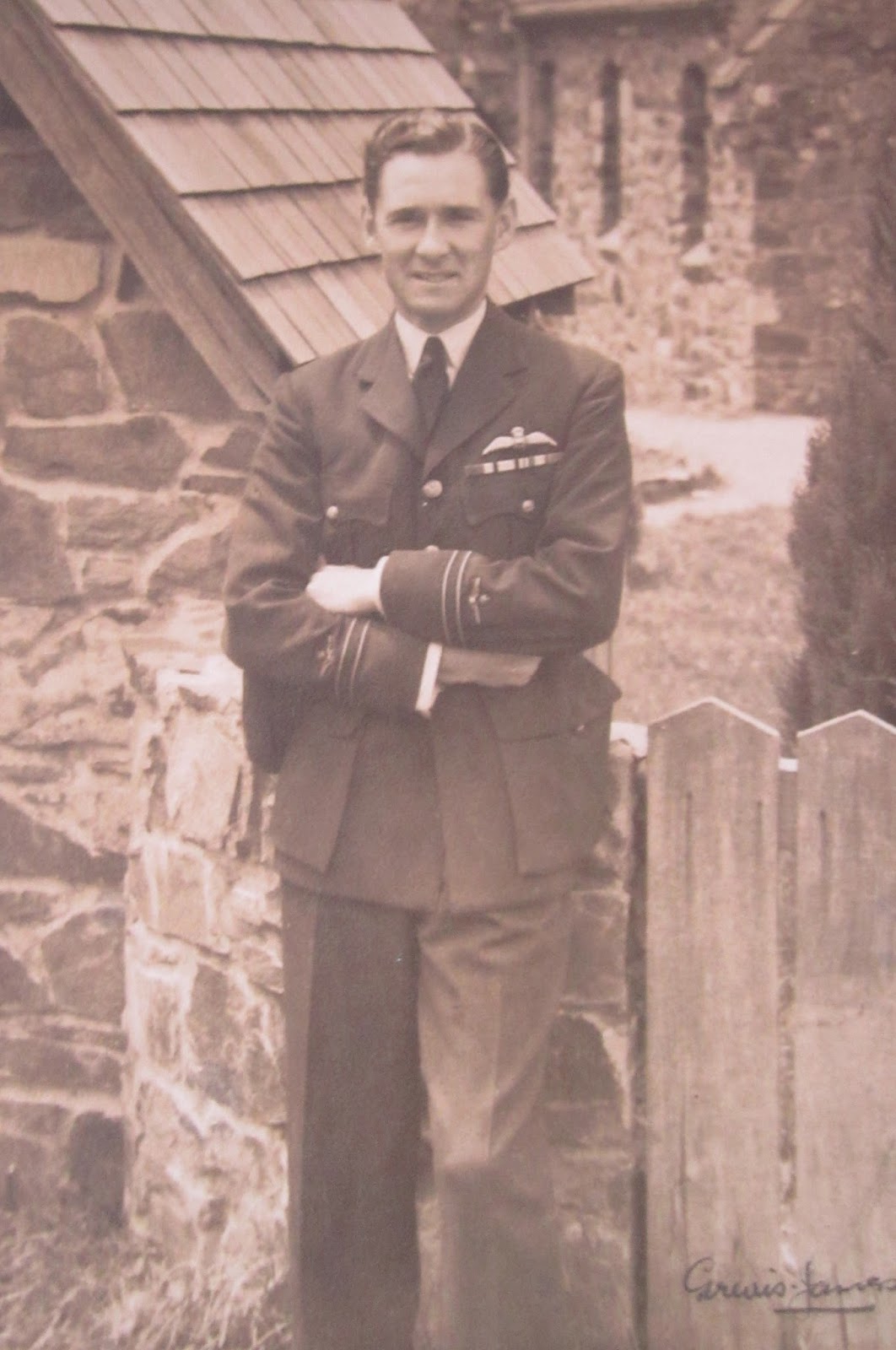
Miss Celia Macdonald of the Isles ‘who has been a particularly good friend’

In April 2009, the great nephew of one of Australia’s Battle
of Britain pilots contacted me. He had heard I was researching the Battle and
wondered if I would be interested in William Henry ‘Bill’ Millington Jr’s
diaries and letters. Would I, ever! In the parcel was a ‘last letter’, given to
Miss Celia
Macdonald of the Isles to pass onto the
Millington family in the event of Bill’s death. It was accompanied by Miss
Macdonald’s condolence note to Bill’s mother, Elizabeth. These had been offered
to a major collecting institution which had knocked them back.
Lady Frances Ryder and Miss Macdonald
ran the Dominion and Allied Services Hospitality
Scheme, an important social organisation for Australian and other Allied
servicemen and women. The Scheme was well recognised and appreciated by those who
enjoyed ‘wonderful leaves while serving in the United Kingdom’ so I wondered
why the letters had been declined. I recalled an article published in Wings in 2007 in which the author had
unsuccessfully sought information about it so thought perhaps it and its
significance to Australians had faded from contemporary memory.[i]
But it was not that.
According to Bill’s
great nephew, the institution’s representative told him
that ‘Miss Macdonald was a euphemism and not a real person’.[ii]
A quick internet check indicated that Miss Celia Macdonald of the Isles appears
in The Peerage and had been awarded an OBE and later advanced to CBE for her
work with the organisation.[iii]
So, not a euphemism, and very real. Someone had got it wrong. That, then, was
my cue to discover more about the Dominion and Allied Services Hospitality
Scheme as well as Miss Celia Macdonald—unrecognised by a major military archive—and
her role in the life and death of one of Australia’s Battle of Britain pilots.
Although non-British servicemen during
the Great War received hospitality from the War Chest Club, the Anzac Buffet
and the Red Cross, Lady Frances Ryder’s father, the 5th Earl of Harrowby, and
his wife, believed Australian mothers would be ‘suffering agonies’ at the
thought of being separated from their sons and so they decided to do what they
could to alleviate their anxieties.[iv]
This concern was based on strong connections with Australia. Lord Harrowby
first visited in 1886 and admired Australia and her ‘sturdy sons’, making a
special study of Australian affairs. In addition, his brother, Captain the Hon. Robert Ryder, who was aide-de-camp to George Ruthven Le Hunte, governor of South Australia from 1 July 1903
until 18 February 1909, had married an
Australian.[v]
The Dominion Officers’ Hospitality Scheme was launched in May 1917 when Lord
and Lady Harrowby opened the doors of their London residence to visiting
officers and convalescents.[vi]
Lady Harrowby and her daughter considered
it ‘a privilege to do something to brighten the lives of officers and men on
leave and in hospital’ and threw themselves wholeheartedly into what became ‘a
very personal work’[vii].
They were assisted by Helen Wallis who took on the role of organising
secretary. Joyce Fry, who hailed from Queensland, joined them at a later date.[viii]
In addition, Lady Frances invited Miss Celia Macdonald, the only daughter of
Sir Alexander and Lady Bosville Macdonald of the Isles, to join her in
welcoming visitors and developing a network of hosts and hostesses.[ix]
And they were successful. The Harrowbys alone received 13,000 officers while
600 hostesses throughout England and Scotland entertained over 8200 officers,
including 2000 Australians.[x]
Lady Frances and Miss Macdonald had
much in common. They were of similar ages—born on 7 August 1888 and 28 January
1889 respectively—background, character and interests. Both lived a life of
privilege; they were educated at home by governesses and enjoyed comfortable
childhoods. As was usual with young ladies of their class, they were presented
at court; Lady Frances in June 1906 and Miss Macdonald in 1908. After their
presentations, their paths continually crossed as they made the usual round of
dances, house parties and country weekends.[xi]
Both were staunch churchwomen—Lady
Frances, in particular, was strongly against divorce and, in later years,
divorcées were excluded from her hostess list—and devoted to their charities.[xii]
They were kind, thoughtful, genuinely concerned for the welfare of their
military friends and had the knack of putting people at their ease, keeping the
conversation flowing with little effort, with Miss Macdonald in particular,
often maintaining half a dozen at a time, all while pouring the tea and passing
sandwiches.[xiii]
Miss Macdonald was warm, never failing
in gaiety and had an infectious laugh. She was musical and played the piano and
violin. She was a talented soprano and passionate member of the Bach Choir. After
she came out, she took over the running of the scout troop in the village of
Rudston and was, in the words of her nephew, constantly ‘up to some good works
as it was not in her nature to sit and do nothing’.[xiv]
The efforts of Lady Harrowby, Lady
Frances and Miss Macdonald were publically recognised on 27 June 1919 when they
were appointed to the Civil Division of the Most Excellent Order: Lady Harrowby
was made a Dame Commander; her daughter a Commander; and Miss Macdonald an
Officer.[xv]
The Scheme had fostered such great international relations that, rather than allow
it to lapse after the war, ‘prominent politicians’ who recognised its ‘imperial
value’ suggested working with the young people of the Empire. Accordingly, the
new Dominion Students’ Hospitality Scheme catered to students taking up places
in Britain’s universities.[xvi]
Lord Harrowby’s London residence
proved inadequate and so a new base was required. Lord Cadogan offered a
favourable rent at 21B Cadogan Gardens.[xvii]
It wasn’t long before a regular stream of male and female undergraduates,
Rhodes Scholars, military cadets and anyone else who had arrived in England
without friends but with an appropriate letter of introduction, made 21B their
second home.[xviii]
Miss Macdonald left in 1919 but rejoined Lady Frances in 1922 and they
continued to work together until Lady Frances was forced to retire in 1933
because of ill health.[xix]
Miss Macdonald then took over the running and her contribution was again
recognised when she was advanced to CBE in 1937.[xx]
With war imminent, Air Ministry
adopted the Scheme for the benefit of Commonwealth personnel, renaming it the Dominion and Allied Services Hospitality Scheme. Lady
Frances came out of retirement and resumed her position beside Miss Macdonald
at the tea table. They expanded their card files, increased the hostess network
and appointed regional coordinators. They recruited new helpers who typed
welcoming letters to new arrivals—which Miss Macdonald signed—and sent out
invitations complete with host addresses, details of the nearest train station,
a discrete slip of paper outlining appropriate tips for household staff, and an
exhortation to send a wire to advise their arrival time.[xxi]
Lady Frances and Miss Macdonald did
their utmost to match their military clients with suitable hosts. They asked
where they would like to spend their leaves, what sports they played, and
whether they wanted a quiet break or a busy time.[xxii]
For the most part, they were successful. When Wade Rogers arrived at Cadogan Gardens,
he longed for a country family and home cooking. He was sent to the Pillings in
East Yorkshire. Dick Pilling pressed Wade to call him ‘Uncle Dick’ and the
young Australian felt so comfortable he returned many times.[xxiii]
Referrals were not always as successful, however. Yorkshire hospitality had little to offer
someone as lively as Pat Hughes.
He
soon discovered that ‘the local families are either terribly county or else
strict church goers’. The highlights were ‘an occasional game of tennis with
several of the fair widows of the district’, but the lowlights were ‘evenings
at home which consist of my slowly sipping a glass of muck after struggling
through an incredibly indigestible dinner’. Then, recounted Pat, the hostess
would ‘spring to her feet, clap her hands and after gazing around for several
minutes’ have ‘a brain wave’ and ‘exclaim, “I know let’s play sardines”—Ye
gods, our existence is limited’.[xxiv]
Northumbrian-born Bill Millington, who
had arrived in Adelaide, South Australia on his 9th birthday, had a much better
experience of British hospitality. Miss Macdonald wrote to him after he was
notified of his short service commission, welcoming him to England and inviting
him to come along ‘to have tea with us’ at any time ‘as you will always find
somebody here’.[xxv]
Bill was drawn almost immediately to
Miss Macdonald. Perhaps her comfortable demeanour reminded him of his mother, perhaps
he delighted in accounts of her stay in Adelaide during her world tour in
1936–37.[xxvi]
Perhaps it was their shared adherence to the strong moral principles of scout
law: whenever he wasn’t dreaming of flying, Bill had channelled all his
energies into the scouting movement, graduating from cub, to scout and rover,
winning many achievement badges on the way.[xxvii]
Whatever the basis, they developed a warm empathy.[xxviii]
The opportunities offered to young
airmen were vastly different from anything they had experienced before. Geoff
Cornish enjoyed his host’s priceless collection of etchings of Heath Robinson
inventions.[xxix]
David Scholes, guest of Tom Maclean, the Earl of Ancum’s gamekeeper, went
fishing and hunting on the Monteviot Estate.[xxx]
Bill Millington accepted ‘numerous invitations to dinners etc. Last night I
went with a party to the open air theatre in Regent’s Park ... I’m going to a
garden party on Saturday.’ He had a ‘very pleasant evening’ with Lady Douglas
Smith and her daughters, joined Sir Stuart and Lady Sankey for lunch, and
chatted with Lord Athlone, ‘brother to Queen Mary and former governor-general
to South Africa’. He lunched at the Café Anglais, followed by an afternoon at Boodle’s,
a gentlemen’s club.[xxxi]
Amusing as all that was, he liked nothing better than being with family and
friends, and when he visited Ruckley Grange he had both. He was embraced by the
Reid Walkers, a welcoming family who did not stand on ceremony. His first
Christmas in England since he was a lad of eight was a warm, happy affair en famille. He had ‘a very enjoyable
time’, full of ‘hunting, felling trees, shooting, skating and tobogganing’ and
trimming the Christmas tree.[xxxii]
Bill accepted the Reid Walkers’
prosperity as a matter of course but John Crossman was dazzled by his hosts’ ‘big
Buick and three Standards and ... staff of servants. It must cost 40 pounds a
week to run that house.’ In addition, ‘we sit at dinner and drink champagne and
look absolutely it. There’s no doubt how these people do live well.’[xxxiii]
As war progressed, Lady Frances and
Miss Macdonald entertained Polish, Czech, Norwegian and Dutch servicemen and
the free French forces. After Dunkirk, they welcomed Australian and New Zealand
nurses who had fled France and received a royal imprimatur when Queen Elizabeth
joined them at the tea table to meet those brave women.[xxxiv]

On 17 June 1940, Bill Millington was
posted to 79 Squadron which had two pilots killed in France, one taken prisoner
and two wounded.[xxxv]
He knew it would not be long before he joined his new friends on operations. He
recognised that ‘the possibility of a hasty departure
from this life is ever present’. He had no fear of dying; he accepted
that possibility and was ‘light of heart’ as he prepared
for his first sortie.[xxxvi]
Knowing he might not return, he decided to write a ‘last letter’ to his
parents, to be delivered only in the event of his death. ‘Please do not grieve over my passing. I would not have it otherwise’,
he told them. ‘Flying has meant more to me than just a career or means
of livelihood’, he explained. ‘The intoxication of
speed, the rush of air and the pulsating beat of the motor, awakes some
answering chord deep down which is indescribable.’ He posted the letter to Miss
Celia Macdonald, ‘who has been a particularly good friend to me’ for safe
keeping. Despite having close family in England he asked Miss Macdonald to act
as his next of kin, entrusting to her the task of gathering up ‘any of my personal
effects ... in the event of some untoward incident’.[xxxvii]
By 31 August, Bill had been in action
a number of times and had already achieved a string of victories. He was in the
air twice that day, again adding to his personal and squadron ‘bag’. During his
first outing, ‘we engaged about twenty Me 109s and slapped quite a few down’. He
was ‘badly shot up and made a forced landing near Folkestone and returned to my
station per police car’.[xxxviii]
Later that day, he and his section were tasked with aerodrome guard duties when
fifteen Dornier Do 215s escorted by large numbers of Messerschmitt Me 109s and
110s were sighted. Bill attacked, setting alight the port engine of one of the
Do 215s. Three Me 109s targeted him. He fired, damaging one as he shook off the
other two. By then he was alone; his confrères were engaged in
their own battles. He again attacked the bombers but was beset by more Me 109s.[xxxix]
He ‘shot down a Messerschmitt 109 after a dogfight with three of them’. He was
hit ‘badly by cannon fire and wounded in the thigh. However I crash-landed in
flames and managed to scramble out before the machine exploded’.[xl]
He walked, with assistance, to a
nearby farm house, then ‘eventually finished up in hospital for about ten days,
where most of the shrapnel in my thigh was removed.’[xli]
When Miss Macdonald visited the convalescent she asked why he had been so
foolish to attack a bomber on his own. ‘Isn’t that awfully dangerous, Bill?’ He
replied, ‘what is one fighter compared with a German bomber?’.[xlii]
And that on top of his decision not to bale out, ‘as my machine would probably
have crashed into a small village’.[xliii]
Miss Macdonald recognised a ‘complete unselfishness’ of ‘outlook [that] is
magnificent and most inspiring’.[xliv]
So too did the Air Officer Commanding 11 Group, Air Vice-Marshal Keith Park who
considered ‘this young Australian officer ... worthy of reward and strongly
recommend him for the Immediate Award of the Distinguished Flying Cross’ for
showing ‘great courage’ in avoiding the small township, ‘despite the fact he
was wounded’ and for exhibiting ‘dash and courage in attacking superior numbers’.[xlv]
Bill was posted to 249 Squadron on 19
September. Over the next few weeks he continued to add to his score against the
Luftwaffe. On 30 October 1940, the squadron was patrolling North Weald aerodrome when they encountered some
Messerschmitt Me 109s. They gave chase and Bill was last seen trying to
intercept one over the English Channel.[xlvi]
Within hours,
telegrams advising that he was missing in action were sent off.[xlvii]
Even though Miss Macdonald had ‘always felt it a great
responsibility’ as custodian of Bill’s ‘last letter’, she did not post it immediately because she knew his parents ‘had such a strong feeling that he
would still turn up and, like you, I hoped and hoped.’[xlviii]
Instead, she wrote to Bill’s mother, who charged her with ‘the sad job of
unpacking the Christmas parcels which had come to him from Australia and
sending them off again to be divided among his friends’.[xlix]
Despite their hopes, Bill did not
‘turn up’. Nor was his body found. In September 1941, Miss Macdonald and the
Millingtons received official notification of presumption of death.[l]
Bill’s friend then posted his ‘last letter’. Although she accepted that ‘we
must presume that he was killed’, she admitted that she could hardly ‘bear to
write the words’. She took comfort—and hoped Elizabeth Millington would as
well—knowing that ‘Bill would want us to be brave and face facts, with as much
courage as possible’.[li]
Just as Bill had tried to assuage his
parents’ grief, so too did Miss Macdonald. She was no stranger to death in conflict.
During the Great War, she had been close to a young man who was killed; if he
had survived, it is likely they would have married. ‘This’, according to her
nephew, ‘caused great sadness to Celia but although she got over it, like all
of these tragedies, one never forgets’.[lii]
With genuine compassion and a deep seated belief in its truth, she told Bill’s
mother that:
We know that he died gloriously. “Greater love hath no
man than this that he lay down his life for his friends.”[liii]
And he was happy. I can assure you of that. You, his mother can indeed be proud
of him and I, one of his many friends, can be grateful for his trust and
affection and for the inspiration and help I gained from his great unselfish
spirit.[liv]
Miss Macdonald lost many more young
friends during the war.[lv]
As she had in the past, she put aside her grief and continued to work
tirelessly at 21B Cadogan Gardens. It wasn’t always easy to keep the rooms open,
however. Bombs were an occupational hazard in London during the Blitz. They fell
all around and, at one point, Miss Macdonald slept for nearly three-and-a-half
months on a deck chair in the lift hall of her block of flats.[lvi]
As the Royal Australian Air Force’s
(RAAF) Empire Air Training Scheme gained momentum, more and more Australian
trainees visited Lady Frances and Miss Macdonald or their regional branches. In
1942 alone, more than 10,000 visits were arranged.[lvii]
Leslie Jubbs recalled that ‘on every occasion my wonderful hosts made my stay
so varied and their generosity was quite overwhelming by kindness’.[lviii]
Bob Nielsen regarded return trips to the Goads, his host family in Bournemouth,
as ‘another homecoming’ where he was ‘treated like a very special member of the
family’ and Mrs Goad ‘lavished on him love and concern’.[lix]
David Scholes relished his visits with the Macleans and regretted the
inevitable departure: ‘It is with great sorrow that I leave Tom and Euph. They ...
have given me a wonderful time making me feel as much at home as possible.’[lx]
Mary Adams, née Hill, lived in
Bournemouth. She recalled that ‘we had our first “boys” for Christmas 1941’,
six months after her brother Sydney was fatally wounded in combat.[lxi]
‘Throughout the remainder of the war, we had over 200 stay with us. In fact I
married one!’ The Hills hosted ‘Australians, Canadians, New Zealanders and the
odd American and South African. Many of them spent all of their leaves with us.
They all called my mother, “mum”.’ Mrs Hill’s new, extended family ‘was a great
happiness’ and comfort in her grief.[lxii]
Inevitably, remembered Mary Adams, ‘we
lost many of them in action’.[lxiii]
As did other host families, they were moved to write to parents after their
guests were reported missing or dead.[lxiv]
For some, the opportunity to condole came years later. Geoff Clark’s parents once
threw an impromptu belated 21st birthday party—‘complete with cake’—for Joe
Leary, who had been in hospital on the big day. Ten days later, Joe, a pilot
with 460 Squadron, was lost on a raid to Friedrichshafen. In 1990, Geoff’s 88-year-old
father visited Joe’s 93-year-old Aunt in Auckland. The Clarks’ in loco parentis role extended to their
guests’ families. Don Walker was one of the first Australians to stay with
them. His brother Bill was taken prisoner of war when Crete fell and so, to
relieve Don of the worry of organising Red Cross parcels, the Clarks offered to
do it. Even after Don died on operations with 235 Squadron, they continued to
send Bill parcels until his release.[lxv]
With peace came the gradual wind down
of the Scheme. It returned to its pre-war character and was renamed the
Dominion Services and Students Hospitality Scheme.[lxvi]
Lady Frances and Miss Macdonald continued to welcome visitors to Cadogan
Gardens, and Miss Macdonald maintained an exhaustive correspondence with her
many friends throughout the world, including Elizabeth Millington.[lxvii]
But her duty to Bill and his family was not yet complete.
Cadogan Gardens escaped the bombing
during the Blitz but much of London was destroyed or damaged. Westminster
Abbey’s Lady Chapel, built by King Henry VII and now more commonly known as the
Henry VII Chapel, was one casualty. When the Dean of Westminster was approached
about a memorial to those who fought and died in the Battle of Britain, he
suggested the Lady Chapel. Lord Trenchard, the Marshal of the RAF, and Lord
Dowding, who led Fighter Command during the Battle, headed the committee to
raise funds to restore the chapel and to commission a commemorative window to
replace the stained glass that was shattered during the Blitz.[lxviii]
On
10 July 1947, King George VI unveiled the Battle of Britain Memorial Window in
honour of ‘The Few’ at Westminster Abbey. The next-of-kin of airmen killed in the
battle were invited to the ceremony at their own expense. Australian-based families who could not be
present were permitted to invite in their stead a relative or friend living in Britain or,
if that were not possible, an officer from the RAAF’s London headquarters would
attend on their behalf. When William Millington Sr learned that Sir Willoughby Norrie, the
governor of South Australia, would be attending, he asked him to stand in for
himself and his wife.[lxix]
Sir Willoughby agreed but on the day when ‘every seat in nave, choir and Henry
VII’s Chapel was filled—the greater number with more than 2500 near relatives
of the men named in the roll of honour’—Miss Macdonald was among them, officially
representing the Millingtons.[lxx]
She later sent Bill’s parents a memento of the dedication.
In
ceremonies throughout Australia on 15 September 1947—Battle of Britain Day—the Royal
Australian Air Force Association inaugurated Air Force Day to annually commemorate
the RAAF’s war dead.[lxxi]
Bill Millington had been rejected when he applied for a RAAF cadetship. It may have been as simple as too many had applied that year and,
with limited cadetships available, many good candidates missed out but his
family believed he had missed out because of lack of money and influence.[lxxii]
Even so, his parents
attended Adelaide’s service. Holding the brochure for
the Battle of Britain Window in Westminster Abbey that Miss Macdonald had sent them, they
remembered their son and his sacrifice.
Later that year, Lady Frances once
again stepped back from the hospitality scheme.[lxxiii]
The ill health that had brought about her retirement in 1933 reclaimed her and
she returned to her childhood home. She suffered breathing problems and was unwell
for a long time before her death on 24 December 1965.[lxxiv]
She was mourned by many friends, all around the world.[lxxv]
In 1948, Miss Macdonald formed the
Dominion Fellowship Trust to take over the hospitality work. As well as running
the Trust, she maintained her maternal role to the many young people in her
life. She was a wise, caring and knowledgeable counsellor to guests of the
Trust and a broad-minded confidante to her own family’s younger generation. She
was ‘a much loved aunt’ to her nephew and ‘her visits were much looked forward
to. You could tell Aunt Celia things that you could not tell other people.’[lxxvi]
In 1959, Oxford University conferred an honorary Master of Arts for her work
with Rhodes Scholars over the years.[lxxvii]
In March 1960, she reluctantly announced that the Dominions Fellowship Trust
would fold in early 1961. Its work would be continued by the Victoria League.[lxxviii]
Miss Macdonald died on 4 January 1976.
Her memorial service was crowded with family, friends, and representatives from
the Victoria League, other akin service organisations and Commonwealth
countries, including Australia, who had benefited from her ‘span of over forty
years of self dedication to a most worthy cause’. In his oration, her friend
Ronald Atkin, a one-time host and ‘honorary office-boy-come-door-boy’ at 21B
with whom she used to play Beethoven symphonies scored for two pianos, told of
the shock of her death, so sudden that family and friends alike were still
reeling from it. ‘We will miss her sorely ... and sharing with us in our loss
... will be that vast world-wide “adopted family” overseas, who have never
ceased to bless her name and that of Frances Ryder.’[lxxix]
Perhaps knowledge of Miss Celia Macdonald’s
great contribution to the comfort of Australians has faded somewhat from the
collective consciousness but ‘a euphemism and not a real person’? I think not.
She was very real.

This essay won the Military Historical Society of Australia's 2013 Sabretache Writer's Prize. An edited version was published in Sabretache, the Journal of the Military Historical Society of Australia Vol LIV, No.3 September 2013 (https://search-informit-com-au.wwwproxy1.library.unsw.edu.au/documentSummary;res=IELAPA;dn=699335233277638) Please email if you would like a PDF.
[i] Jubbs, ‘Lady Frances Ryder’, Wings, Official Publication of the RAAF Association, Volume 59, No.
4, Summer 2007
[iii] http://thepeerage.com/p4345.htm#i43443;
http://www.london-gazette.co.uk/issues/31422/pages/8092;
http://www.london-gazette.co.uk/issues/34396/supplements/3095
[v] The
Register, 13 June 1918 and 21 August 1919. Major Ryder, who served with the 8th (King’s
Royal Irish) Hussars, was killed in action on 30 November 1917.
[vi] The Sydney Morning Herald, 5 January and 16 August 1918;
The Register, 21 August 1919; The West Australian, 20 March 1924
[xi] Their social connection was strengthened in
January 1917 when Miss Macdonald’s brother, Godfrey, married Lady Frances’s
cousin, the Hon. Rachel Campbell. Email Nicola Finlay, Personal Assistant to
The Earl of Harrowby/Alexander 8 December 2011; letter Major Nigel Chamberlayne-Macdonald/Alexander
12 January 2012
[xii] The Courier
Mail, 10 August 1942; Funeral Oration: In Memoriam—Celia
MacDonald 1889–1976 by Ronald William Mein Atkin MBE, courtesy of Major
Nigel Chamberlayne-Macdonald (hereafter Atkin: Funeral Oration)
[xiii] The Australian Women’s Weekly, 13 April 1940; The Times, 30 December 1965; email Nicola Finlay, Personal Assistant to
The Earl of Harrowby/Alexander 8 December 2011; and letter Major Nigel
Chamberlayne-Macdonald/Alexander 12 January 2012
[xiv] In 1935, Miss Macdonald was one of the
choir honoured to sing at King George V’s Silver Jubilee concert. Letter Major Nigel
Chamberlayne-Macdonald/Alexander 12 January 2012; Atkin: Funeral Oration; The Sydney Morning Herald, 2 January
1937
[xvi] Email Nicola Finlay, Personal Assistant to
The Earl of Harrowby/Alexander 5 December 2011; The West
Australian, 10
June 1936
[xxi] Letter Miss Celia Macdonald of the Isles /John
Crossman 18 March 1940, courtesy of Bowden Family Archive
[xxiii] Nelson, Chased by
the Sun. Courageous Australians in Bomber Command in World War II, ABC
Books, Sydney, 2001, p. 68
[xxv] Bill’s welcoming letter is no longer extant but would
have been similar to John Crossman’s. Letter Miss Celia Macdonald of the
Isles/John Crossman 26 October 1939, courtesy of Bowden Family Archive
[xxvii] Handwritten biographical notes by Eileen
Robinson née Millington, courtesy of Robinson Family Archive
[xxix] Hayes, Beyond
the Great Escape. Geoff Cornish: The One Who Got Away, Possum Publishing,
Elanora, 2004, p. 41
[xxx] Scholes, DFC, Air
War Diary. An Australian in Bomber Command, Kangaroo Press, Kenthurst, 1997,
pp. 68 and 53
[xxxi] Letter Bill Millington/Eileen Robinson née
Millington 7 July 1939; and entries for 28 June,
2 July, 21 July and 8 December 1939, Bill Millington’s diary, courtesy of Robinson Family Archive
[xxxii] Letter Bill Millington/Eileen Robinson née
Millington 31 December 1939, courtesy of Robinson Family Archive
[xxxiii] Entries for 24 December and 23 December 1939, John Crossman’s
diary, courtesy of Bowden Family Archive
[xxxv] Bill Millington’s RAF Service record, RAF
Disclosures, via Robinson Family Archive; Cull, Lander and Weiss, Twelve
Days in May. The Air Battle for Northern France and the Low Countries, 10–21
May 1940, Grub Street, London, 1995, pp. 2–5
[xxxvi] Bill Millington’s ‘last letter’ June 1940,
courtesy of Robinson Family Archive. This letter is dated simply ‘June 1940’
but it is clear from the content that Bill penned it just before his first
operation.
[xxxviii] Letter Bill Millington/Eileen Robinson née
Millington 14 September 1940, courtesy of Robinson Family Archive
[xl] Letter Bill Millington/Eileen Robinson née
Millington 14 September 1940, courtesy of Robinson Family Archive
[xli] Undated letter Victoria Wells, Hawkhurst
History Society/Alexander (received 9 March 2011); letter Bill
Millington/Eileen Robinson née Millington 14 September 1940, courtesy of
Robinson Family Archive
[xliii] Austin, Fighter
Command, Victor Gollancz Ltd, London, 1941, p. 193; Bill Millington’s DFC
Recommendation National Archives United Kingdom AIR 2/9398
[xlvi] 79 Squadron Operational Record Book
National Archives United Kingdom AIR 27/664/17; letter
Flight Lieutenant M. Hudson, Air Historical Branch, Ministry of
Defence/Alexander 21 November 2012
[xlvii] National Archives of Australia Barcode
number: 3330251, Series number: A705, Control symbol: 106/6/115, Item title:
RAAF—Directorate of Personnel Services—Casualty Section—Pilot Officer W.H.
Millington DFC DP Air Operations—RAF (NAA Casualty file)
[xlviii] Undated letter Miss Celia Macdonald of the
Isles/Mrs W.H. Millington September 1941. The original of this letter is no longer extant but it was hand copied and distributed throughout
the family. Eileen Robinson’s copy courtesy of Robinson Family Archive
[li] Undated letter Miss Celia Macdonald of the
Isles September 1941/Mrs W H Millington, courtesy of Robinson Family Archive
[liv] Undated letter Miss Celia Macdonald of the
Isles September 1941/Mrs W.H. Millington, courtesy of Robinson Family Archive
[lvii] Nelson, Chased by
the Sun. Courageous Australians in Bomber Command in World War II, ABC
Books, Sydney, 2001, p. 63
[lviii]Jubbs, ‘Lady Frances Ryder’, Wings, Official Publication of the RAAF
Association, Volume 59, No. 4, Summer 2007; http://www.futurepd.org/les/Documents/Unwanted%20Pilot.pdf
[lix] Nelson, Chased by
the Sun. Courageous Australians in Bomber Command in World War II, ABC
Books, Sydney, 2001, p. 63
[lx] Scholes, DFC, Air
War Diary. An Australian in Bomber Command, Kangaroo Press, Kenthurst, 1997,
p. 54
[lxi] Sydney Jenkyn Hill flew in the Battle of Britain with
609 Squadron. On 21 October
1940, he shared in the destruction of 609 Spitfire Squadron’s 100th victory
with Flight Lieutenant Frank Howell. He was the ‘bosom buddy’ of Melbourne born
Battle of Britain pilot John Curchin; the pair were so close they were referred
to as the ‘Heavenly Twins’. John was killed in action on 18 June 1941, two weeks before Sydney’s death. Email Mary Adams née Hill/Alexander 2 December 2011; http://www.cwgc.org/find-war-dead/casualty/2361173/HILL,%20SYDNEY%20JENKYN;
http://www.bbm.org.uk/Curchin.htm
[lxiv] Nelson, Chased by
the Sun. Courageous Australians in Bomber Command in World War II, ABC
Books, Sydney, 2001, pp. 63–64
[lxv]
http://www.theoddbods.org/2012_10/oddsnends04.htm. Bill Walker visited the
Clarks before returning to Australia.
[lxvii] At one time it was estimated that Miss
Macdonald was in continuous contact with 1700 to 1800 former guests from the
Dominions. The Australian Women’s Weekly, 14 November 1936; Eileen
Robinson’s annotation on her copy of Miss Macdonald’s September 1941 letter, courtesy of Robinson Family Archive
[lxviii]
http://www.westminster-abbey.org/visit-us/highlights/the-royal-air-force-chapel;
Perkins, Westminster Abbey. The Royal Air
Force Chapel with the Battle of Britain Window in The Chapel of King Henry VII,
H.B. Skinner & Co Ltd, London, no date, p. 25
[lxxvii] Letter Major Nigel Chamberlayne-Macdonald/Alexander 12
January 2012; The Times, 28 January
1959
[lxxix] The Times, 14 January 1976; Atkin:
Funeral Oration; letter Major Nigel Chamberlayne-Macdonald/Alexander 12 January
2012; The Times, 28 January 1959
Bibliography
PRIMARY SOURCES
PUBLIC COLLECTIONS
National
Archives of Australia
Barcode
number: 3330251, Series number: A705, Control symbol: 106/6/115, Item title:
RAAF—Directorate of Personnel Services—Casualty Section—Pilot Officer W.H.
Millington DFC DP Air Operations—RAF
National
Archives United Kingdom
AIR 2/9398 Bill
Millington’s DFC Recommendation
AIR 27/664/17 79 Squadron Operational Record Book
PRIVATE
RECORDS
Author’s
Records
Email Simon
Robinson/Kristen Alexander 5 January 2011
Undated
letter Victoria Wells, Hawkhurst History Society/Alexander (received 9 March
2011)
Email Mary Adams née Hill/Alexander 2
December 2011
Email Nicola Finlay, Personal Assistant to The Earl of
Harrowby/Alexander 8 December 2011
Letter Major Nigel Chamberlayne-Macdonald/Alexander 12 January 2012
Letter Flight
Lieutenant M. Hudson, Air Historical Branch, Ministry of Defence/Alexander 21
November 2012
Robinson Family Archive
Bill
Millington’s 1939 diary
Letter Bill
Millington/Eileen Robinson née Millington 7 July 1939
Letter Bill
Millington/Eileen Robinson née Millington 31 December 1939
Bill
Millington’s ‘last letter’ June 1940
Letter Bill
Millington/Eileen Robinson née Millington 14 September 1940
Undated
letter Miss Celia Macdonald/Mrs W.H. Millington September 1941
Handwritten
biographical notes by Eileen Robinson née Millington
Unpublished
biographical
essay by Simon Robinson
Bill
Millington’s RAF
Service record, RAF Disclosures
Bowden
Family Archive
John Crossman’s 1939 diary
Letter
Miss Celia Macdonald of the Isles/John Crossman 26 October 1939
Letter Miss
Celia Macdonald of
the Isles/John Crossman 18
March 1940
Major Nigel Chamberlayne-Macdonald
Funeral
Oration: In Memoriam—Celia MacDonald
1889–1976 by Ronald William Mein Atkin MBE
The Late Greg Hughes
Letter
Pat Hughes/ Charles and Heather Hughes July [1939]
SECONDARY SOURCES
NEWSPAPERS
The Advertiser, 7 June and 16 September 1947
The Age, 19 January 1924
The Argus, 23 January 1924
The Australian Women’s Weekly, 14 November 1936 and 13
April 1940
The Courier Mail, 10 August 1942
The Mercury, 11 July 1947
Queensland Figaro, 28 April 1928
The Register, 13 June 1918 and 21 August 1919
The Sydney
Morning Herald,
5 January 1918, 16 August 1918, and 2 January 1937
The Times, 9 and 11 July 1947, 28
January 1959, 25 March 1960, 30 December 1965, and 14 January 1976
The West
Australian,
20 March 1924, 10 January, 10 June and 8 December 1936, 5 April 1941, and 23 November 1946
BOOKS
AND ARTICLES
Austin, A. B., Fighter
Command, Victor Gollancz Ltd, London, 1941
Cull, B., Lander, B., and Weiss, H., Twelve Days in May. The Air Battle for
Northern France and the Low Countries, 10–21 May 1940, Grub Street, London,
1995
Hayes, H., Beyond
the Great Escape. Geoff Cornish: The One Who Got Away, Possum Publishing,
Elanora, 2004
Jubbs, L., ‘Lady Frances Ryder’, Wings, Official Publication of the RAAF Association, Volume 59, No.
4, Summer 2007
Nelson, H., Chased by the Sun.
Courageous Australians in Bomber Command in World War II, ABC Books,
Sydney, 2001
Perkins, J., Westminster Abbey. The Royal Air Force
Chapel with the Battle of Britain Window in The Chapel of King Henry VII,
H.B. Skinner & Co Ltd, London, no date
Scholes, DFC, D., Air
War Diary. An Australian in Bomber Command, Kangaroo Press, Kenthurst, 1997
WEBSITES
http://thepeerage.com/p4345.htm#i43443
http://www.london-gazette.co.uk/issues/31422/pages/8092
http://www.london-gazette.co.uk/issues/34396/supplements/3095
http://www.westminster-abbey.org/visit-us/highlights/the-royal-air-force-chapel
http://www.theoddbods.org/2012_10/oddsnends04.htm
http://www.futurepd.org/les/Documents/Unwanted%20Pilot.pdf
http://www.cwgc.org/find-war-dead/casualty/2361173/HILL,%20SYDNEY%20JENKYN
http://www.bbm.org.uk/Curchin.htm